
The development has begun!
In December 2021, we launched our new Registered Canadian Charity and announced our first Call for Proposals. The Burundi Advisory Committee (BAC) reviewed all the proposals and recommended that a grant be provided to three of the proposed projects. The Canadian Board of Directors considered the recommendations, conducted its own evaluation and awarded the one-time, start-up development grant to three of the proposed projects. All three projects have received their first installment of grant money and all three development projects have begun implementation.
- Cultivating Cabbages and Breeding Pigs for Poor and Vulnerable Women from Nderama Hill, Bukinanyana Commune, Cibitoke Province – Project Manager: Etienne KATABIRORA
- Supporting Vulnerable Women in Cultivating Corn and Breeding Goats at Ndava Hill in Buganda Commune, Cibitoke Province – Project Manager: Fabien BIMENYIMANA
- Supporting Vulnerable Women and Girls to Improve Their socio-Economic Situation by Farming Potatoes and Breeding Pigs in Migano Village, BUKIRASAZI Commune, Gitega Province – Project Manager: Prosper NIYONGERE
To consider making a donation, please click on the Donations tab above.
Below, this Newsletter provides a brief start-up report and a few photographs on each of the three development projects.
Cultivating Cabbages and Breeding Pigs for Poor and Vulnerable Women from Nderama Hill, Bukinanyana Commune, Cibitoke Province
Project Manager: Etienne KATABIRORA
Etienne KATABIRORA has a Bachelor’s Degree from Hope Africa University. Etienne has experience cultivating cabbages, potatoes and other crops and raising pigs and other animals. Etienne demonstrated his ongoing interest in becoming a project manager for a long time before he his proposal was approved for a development grant. Etienne has the key development support feature of physical presence; he has the advantage of living in the area where his development project is located.
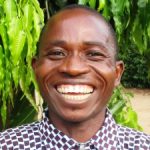
Introduction
This project is off to a great start. The purpose of this active project is to empower vulnerable women by gathering them into a self-help association and encouraging them to work together in order to address their daily issues and improve their socio-economic situation. Through the association, the project functions will include cultivating cabbages, breeding pigs and microfinancing. The project aims to promote and develop self-help and self-support among the beneficiaries.
Developing the Association
First of all, the Project Manager, Etienne, contacted the local administration to receive assistance in identifying and recruiting poor and vulnerable women who fulfill the requirements to be selected as beneficiaries. After the selection, the women agreed to join and sign into the self-help and self-support association named “DUFASHANYE” that can be literally translated as “Let’s Help Each Other.”
After signing their agreement to be association members, the women elected their officers. They were trained on how to become self-supporting, self-managing, self-governing and self-sustaining. The training took place through different sessions that were conducted by the Project Manager. The beneficiaries were encouraged to sustain and support each other to strengthen social cohesion and unity. They were encouraged to work together for the common interest. The members agreed to holding weekly meetings and making small financial contributions at each meeting.
Crop Cultivation
As a volunteer workforce, the association members are working together to do all of the work required for cultivating cabbages. The women have rented a field, bought seed plants and planted the cabbage plants.
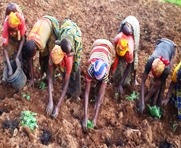
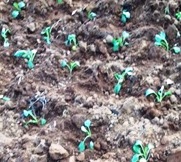
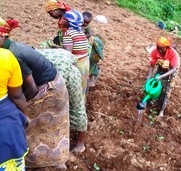
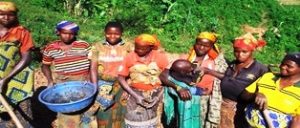
The women will cultivate cabbages during the two growing seasons. After harvesting the cabbages in September, the beneficiaries will share 50% of the harvest and the association will sell 50% of the cabbages. The women will rent another field to cultivate cabbages for the second season. By selling half of each harvest, the association will have enough money to be able to continue with self-supporting cultivation. The ongoing cultivating and harvesting of cabbages will contribute in food security and socio-economic sustainability. In order to generate even more revenue for the association and some for themselves, the women will work for other community farmers. The income from the work will be divided equally with 50% of the money going to the association and 50% going to the women and their families.
Breeding Pigs
Once the cultivation has become self-supporting, the Project Manager will work with the Executive Committee members and the remaining grant money to find and purchase 8 female pigs for the association. The beneficiaries will be responsible for the care of the pigs. When the pigs have piglets, 8 of the first generation of piglets will be given to the beneficiaries. The pigs represent an important source of organic fertilizer. The pigs will become an important source of income for the association and the beneficiaries.
Microfinancing
Through the project, the beneficiaries will be empowered by a mindset change, related to the value of maintaining self-help through microfinancing. The project is developing its own internal microfinancing program to provide the association members with repayable loans for the development of income-generating businesses. The related income is expected to help with their children’s education expenses and contribute to increasing food security for their families.
Each woman is expected to contribute 500 BIF at each of the regular weekly association meetings in order to build the capital for loans for personal income-generating activities such as buying and re-selling vegetables. The collected money is now over 36,000 BIF and is kept in a small box with three locks and three keys. The keys are kept by three different members in order to open the box in the light of all the members. All withdrawals must be approved in the association’s meetings and recorded in the minutes. The association members have started to get some loans for personal income-generating businesses. A total of 30,000 BIF has already taken by two of the members for this purpose.
Testimony from the Project Manager
The eight women forming the association of Nderama colline are thankful for the support from Canadian Haley-McCready Outreach and Development Fund. They are very thankful for the founder of this program together with his team (Burundi and Canada). They also thank the project manager so much for his valuable work of looking for the funds to support his colline in development.
Additional Comments from Etienne
After starting the association, different people have seen how the project is designed and they have started to press the project manager that he must start another association. The project manager has replied to them that they must wait until the outcomes of the first project are sufficient to support the development of a new project.
Supporting Vulnerable Women in Cultivating Corn and Breeding Goats in Cibitoke Province, Buganda Commune at Ndava Hill
Project Manager: Fabien BIMENYIMANA
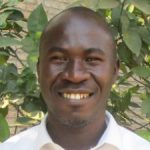
Fabien BIMENYIMANA holds a Bachelor’s Degree and a Master’s Degree in Nursing from Hope Africa University. As a student, Fabien was a Minister of Culture and Sports Affairs for the Hope Africa University Student Counsel. Fabien works for the Van Norman Clinic of Hope Africa University and he is the Founder and Legal Representative for a large development NGO called APADECO.
Introduction
This project has begun implementation. The purpose of this project is to reduce poverty of vulnerable women in Cibitoke Province by cultivating corn, breeding goats and microfinancing. The overall goal of this project is to increase the agriculture production capacity and financial power of vulnerable women and their families. In addition to the benefits of belonging to a self-help and self-supporting association, the main project functions are cultivating corn, breeding goats and microfinancing. To develop the capacities of the beneficiaries, the Project Manager will organize and conduct training on developing the association, working in unity, solving problems, cultivating corn, breeding goats, managing money and entrepreneurship. The capacity development training is expected to enhance leadership participation and prepare the members to become self-supporting, self-managing and self-governing.
Developing the Association; BIRASHOBOKA which means “It’s Possible”
In order to have a strong association, the selection of the beneficiaries is very important. The Project Manager, Fabien, met with the local administration in order to identify and select members. The Project Manager travelled to Ndava Hill in Cibitoke Province three times in order to work closely with the 9 women, the association members. Fabien explained the purpose of the development project, oversaw the signing of the membership agreements and provided some training on group development, financial management and microfinancing. The members voted on the association’s rules and regulations, elected officers; a President, Secretary-Treasurer and Advisor, and agreed to continue peacefully and hold weekly meetings.
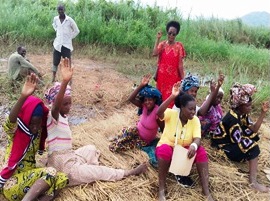
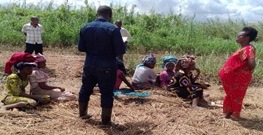
With the association established, Fabien presented the first installment of grant money to the association members to be deposited in their new bank account that requires three signatures.
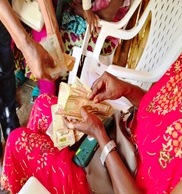
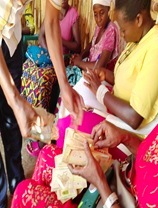
Cultivating Corn
As planned, all of the association members will be involved as a volunteer workforce for all of the cultivation work and the business transactions (e.g., renting land, signing the agreement, buying materials, seed and fertilizer and selling harvests). Soon after developing the association, the Project Manager requested the members start looking for a field to rent to cultivate corn. All of them decided to look for a field in a place where there is water so the field could be used right after the renting the field and during the dry season. This was done to facilitate the cultivation of three crops during the year. They found a field for 700, 000 BIF for one year. With all association members as witnesses, a rental agreement was signed between the landowner and the officers of the association.
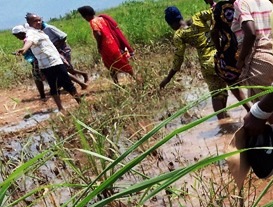
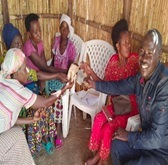
All the beneficiaries will work together in preparing the field and all of the other cultivation activities. Through additional capacity development training, the beneficiaries will learn higher, more modern techniques of cultivating corn and improving the harvests. After the harvest, the beneficiaries will get 45% of the corn and 10% will be kept for seeds and 45% will be sold by the association in order to support the costs of the continuation of cultivating corn.
Breeding Goats
Although the project will become involved in breeding and distributing goats, the purchasing of the first 9 female goats is purposefully being delayed until the corn cultivation function has had successful harvests and has clearly become self-supporting for the ongoing continuation of cultivating corn.
Microfinancing
With the association established and holding weekly meetings, the project has started developing the microfinancing function and building capital. Each woman is contributing 500 BIF per week to the internal microfinancing fund. This money will be something like the beneficiaries having their own community bank. The money will primarily be used to provide small loans that must be repaid at a low 3% rate of interest. As soon as the microfinancing fund has sufficient capital, the association members will be encouraged to take repayable loans in order to start income-generating activities and, thereby, produce income for themselves and their families.
Future-Oriented Perspectives
The association members chose a field where there is water so they can cultivate three times during the conventional two planting seasons. The beneficiaries urgently requested the second installment of grant money so they can extent the cultivation of corn and beans and locate and rent another big field for additional cultivation.
Supporting Vulnerable Women and Girls to Improve Their socio-Economic Situation by Farming Potatoes and Breeding Pigs in Migano Village, BUKIRASAZI Commune, Gitega Province
Project Manager: Prosper NIYONGERE
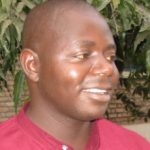
Prosper NIYONGERE is a graduate of the Entrepreneurship and Business Management Program at Hope Africa University. Prosper has four years experience as a successful volunteer Project Manager for another agriculture development project.
Introduction
This project is successfully underway. The purpose of the project is to improve the socio-economic situation of the widows, orphan girls and landless women. The project has developed a project association of vulnerable women and girls. Through the association, the major functions are farming potatoes, breeding pigs and microfinancing. The project aims at developing the capacities of the women and improving the quality of life of the beneficiaries and, thereby, enabling the association and its members to become self-supporting, self-managing, self-governing and self-sustaining.
Developing the Association
The Project Manager, Prosper, has recruited 8 vulnerable women, comprised of orphan girls, widows and landless women whose ages are between 18 to 55 years old. The women have been organized into a project association named “TUJEHAMWE” and meaning, “To Be Together.” To join the project and become a member of the association, each woman was required to sign a contract and agree to adhere to the association’s rules and to work as a volunteer in order to serve the common interests. Prosper has begun training the beneficiaries on working together, cultivating potatoes, microfinancing, entrepreneurship and finance literacy. The beneficiaries are already participating in all of the activities, presenting new ideas and contributing to decisions. The association has been registered with the local administration.
Farming Potatoes
The project is actively involved in farming potatoes at Migano village, BUKIRASAZI commune in GITEGA province. The 8 women are all committed to working hard to achieve the common vision. With Prosper’s guidance, the association members have rented a large field and the association has purchased hoes for all of the 8 women.
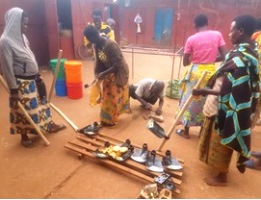
To empower the association members, some training was provided on new techniques and skills for crop cultivation. A beneficiary who already has some skills and experiences is teaching others in order to continue to help each other. The farming began by preparing the field for planting.
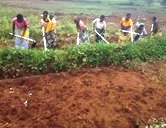
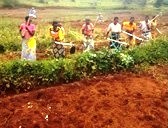
Once the field was prepared, the association purchased the seed potatoes and the seed potatoes were planted. The association members are expecting a good harvest in September. At each harvest, association members will share 40% for themselves and their families save and store 20% for seed and sell 40% for self-support of the continuation of crop cultivation.
Breeding Pigs
Some of the grant money will be used to build a pig pen and buy 3 adult female pigs for the association. The beneficiaries will feed and care for the pigs and will be given a piglet from the first generation of pigs. The pigs will provide organic fertilizer and an important source of income for the association and the beneficiaries. However, the purchasing of pigs is being deliberately delayed until the cultivation of potatoes has become completely self-supporting.
Microfinancing
The association members have been organized into a savings and loans group (SLG). The beneficiaries have been trained on the purpose and value of savings and loans. The saving and loans activities are done every week on Wednesday.
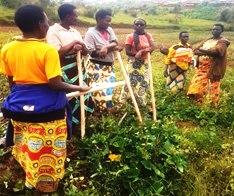
The savings and loans program will permit the women to accumulate savings and acquire loans for income-generating activities that can produce income and more savings. It is hoped that the savings and loans program will allow the beneficiaries to rent land their own land and become more involved in cultivating potatoes and other crops.
Testimony from Prosper; the Project Manager
We are committed to work hard to reduce food insecurity and make Burundi a better place to live, even if we always face challenges related to financial support which is one of the setbacks that can prevent us from moving forward the way we want. This is our time and opportunity to let you know that the project activities are progressing very well.
Already, social relations between and among the widows, landless women, orphan girls and other people in the community have been fostered and improved. The self-esteem, togetherness, unity and harmony of beneficiaries have risen.
We really salute the commitment of Dr. John McCready for becoming a channel of blessings to the vulnerable women of Migano.
We express our gratitude to the Canadian Haley-McCready Outreach and Development Fund support for its commitment to helping our community.
We appreciate in a mighty way all of the beneficiaries for their commitment to transforming their lives and our nation.
To consider making a donation, please click on the Donations tab above (at the top).