
The main purpose of this Newsletter in to provide update progress reports on the implementation of the first three agriculture development projects that received a one-time, start-up grant from the Canadian Haley-McCready Outreach and Development Fund.
- Cultivating Cabbages and Breeding Pigs for Poor and Vulnerable Women from NDERAMA Hill, BUKINANYANA Commune, CIBITOKE Province – Project Manager: Etienne KATABIRORA
- Supporting Vulnerable Women in Cultivating Corn and Breeding Goats at NDAVA Hill in BUGANDA Commune, CIBITOKE Province – Project Manager: Fabien BIMENYIMANA
- Supporting Vulnerable Women and Girls to Improve Their Socio-economic Situation by Farming Potatoes and Breeding Pigs in MIGANO Village, BUKIRASAZI Commune, Gitega Province – Project Manager: Prosper NIYONGERE
All three of the projects are doing very well; each of the projects has established a self-help association, harvested crops, purchased animals and developed microfinancing. Our agriculture development model works! The projects are becoming self-supporting and alleviating poverty.
A secondary purpose of this Newsletter is to remind our readers in Canada who have not yet made a donation to consider doing so now. To allow us to continue to provide more development grants, please consider making a donation before the end of the calendar year which is the end of the tax year. For instructions on how to donate, please use the tab above or the link below.
Donations – Haley-McCready Outreach and Development Fund (haley-mccreadyfund.ca).
CULTIVATING CABBAGES AND BREEDING PIGS FOR POOR AND VULNERABLE WOMEN FROM NDERAMA HILL, BUKINANYANA COMMUNE, CIBITOKE PROVINCE, Project Manager: Etienne KATABIRORA
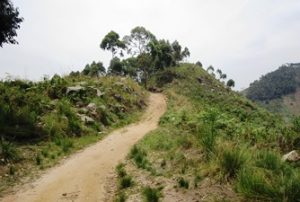
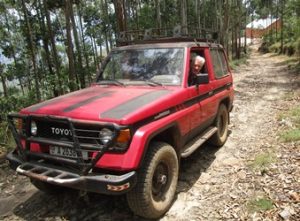
In October, we made an onsite visit to the project. Although interesting and beautiful, it is a long, difficult drive to the most northern part of CIBITOKE Province and very close to the Rwandan border. Some of the roads are quite narrow and challenging and it’s just like driving in Africa.
INTRODUCTION
This project is off to a great start. The purpose of the project is to empower vulnerable women by gathering them into a self-help association and encouraging them to work together in order to address their daily issues and improve their Socio-economic situation. Through the association, the project functions include cultivating cabbages, breeding pigs and microfinancing. The project aims to promote and develop self-help, self-support and self-governance among its beneficiaries.
DEVELOPMENT OF THE SELF-HELP ASSOCIATION
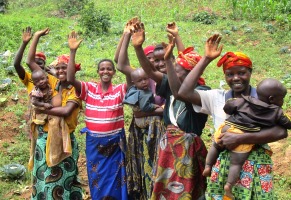
First, the Project Manager contacted the local administration to receive assistance in identifying and recruiting 8 poor and vulnerable women who fulfilled the requirements to be selected as beneficiaries. After the selection, the women agreed to join and sign into the self-help and self-support association named “DUFASHANYE” that can be literally translated as “Let’s Help Each Other.” After signing their agreement to be association members, the women elected their officers. They were trained by the Project Manager on how to become self-supporting, self-managing, self-governing and self-sustaining which are the four main principles of the Haley-McCready Outreach and Development Fund. The beneficiaries agreed to work together on cultivating cabbages and breeding pigs. They agreed to hold weekly meetings and to make small financial microfinancing contributions at each meeting. The women were encouraged to sustain and support each other in order to strengthen social cohesion and unity. They were encouraged to work together for their common interest and the project association is functioning well.
CROP CULTIVATION
As a volunteer workforce, the 8 association members worked together to do all of the work required for cultivating cabbages. The women rented two fields, bought seed plants and planted the cabbage plants. After that, they continued watering cabbages field day by day in order to have a good harvest of cabbages. Because planting was done during the dry season, the women watered cabbages field every morning and evening.
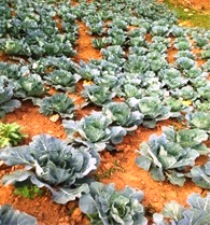
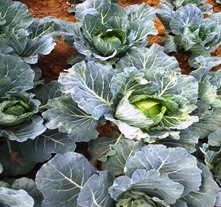
After harvesting the cabbages from the end of September until mid-October, the women shared 50% of the harvest and the association sold 50% of the cabbages.
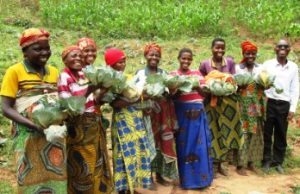
By selling half of each harvest, the association will get enough money to be able to continue with self-supporting crop cultivation. The ongoing cultivating and harvesting of cabbages will contribute to increasing food security and socio-economic sustainability. In order to generate even more revenue for the association and some for themselves, the women work for other community farmers. The additional income is shared equally between the women and the association.
BREEDING PIGS
With self-supporting crop cultivation successfully established, the project has moved forward with the purchase of pigs for the association. At this time, 6 pigs have been purchased and 2 more still need to be purchased. The first 8 pigs will be owned by the association and cared for by the association members. When the association pigs have piglets, each association member will be given a piglet of their own.
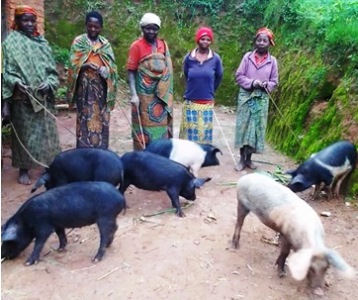
Through the animal husbandry, the association members believe that they are going to boost their land productivity by collecting and using the manure from the pigs to fertilize their fields. Also, they believe that in few months, they will be having the piglets for both the association and the members. The sale of pigs will provide another important source income for the association and the individual members and their families.
MICROFINANCING
Through the project, the beneficiaries are empowered by a mindset change, related to the value of maintaining self-help and self-sustainability through microfinancing. The project is developing its own internal microfinancing program to provide the association members with repayable loans for the development of income-generating businesses. The related income is expected to help with their children’s education expenses and contribute to increasing food security for their families.
Each woman is contributing 500 BIF each week to build the capital for loans for personal income-generating activities such as buying and re-selling vegetables. The collected money already exceeds 50,000 BIF. A small box is used to keep the collected money securely. Three different members keep the keys for three different locks in order to open the box in the sight of all the members. The minutes are done for every withdrawal during the weekly meetings. The association members have started to get some loans for personal income-generating businesses. Five different members have already borrowed the sum of 45,000 BIF for this purpose. They recognize the importance and value of having a loan from the association.
TESTIMONY FROM THE BENEFICIARIES
The eight women from NDERAMA association are grateful for the contributions and commitment of the Canadian Haley-McCready Outreach and Development Fund. For them, “Every trip starts by a step” (literally translated from Kirundi to English by the Program Coordinator). For them, they are heading to community development by starting with eight people. They really hope that they will influence other community members to join the program. Big things happen through small ones. They appreciate the work of the collaborative team (Burundi and Canada). As they are working together, they are becoming a big family as they are changing their mindset. They addressed many thanks to their Project Manager for his tirelessly involvement in bringing them up. They are thankful for his responsibility and his love of his birthplace.
The association members are grateful toward for Project Manager, Mr. Etienne KATABIRORA for his endless contribution in the community. They are also thankful to the Haley-McCready Outreach and Development Fund-Canada in general and, especially, to Dr. John McCready who not only supported the project but also came to visit their association during October 2022.
SUPPORTING VULNERABLE WOMEN IN CULTIVATING CORN AND BREEDING GOATS IN CIBITOKE PROVINCE, BUGANDA COMMUNE AT NDAVA HILL, Project Manager: Fabien BIMENYIMANA
INTRODUCTION
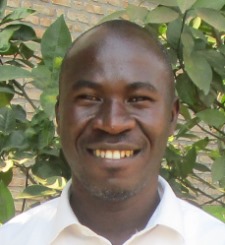
In October, we were able make an onsite visit to the project. CIBITOKE Province is in the northwest region of Burundi and experiences enormous unemployment, extreme poverty, food insecurity, hunger, malnutrition and the devaluation of the vulnerable people’s lives, especially, women, girls, widows and orphans. This project aims to reduce the poverty of the beneficiaries. It is understood that the main pathway to community change is to support vulnerable women to develop their capacity to become independently self-supporting. This project has organized these women together in a self-help association in order to become self-supporting, self-sufficient, self-managing and self-governing. The main project functions are cultivating corn, breeding goats and microfinancing . The women are very thankful for the development grant and they are convinced that something new will happen now for themselves and their respective families. They are thankful toward Haley-McCready Outreach and Development Fund-Canada.
DEVELOPING AN ASSOCIATION
In order to have a strong association, it is very crucial to emphasize the selection of the members. The Project Manager worked with the local administration and identified, selected and organized 9 poor and vulnerable women into a project association (widows, divorced women and some married women from poor households). The women were told about the project and were required to sign a contract agreeing to join the project association (BIRASHOBOKA which means “It’s Possible”), to follow the rules and expectations and faithfully serve the common good of its members. The members democratically elected the President, a Secretary-Treasurer and an Advisor. The project holds weekly meetings and all of the beneficiaries are required to attend and participate. The women were given some practical training on cultivating corn, breeding goats and microfinancing. These main functions are expected to generate income and, thereby, improve their social-economic situation and contribute to increasing their self-esteem.
CULTIVATING CROPS
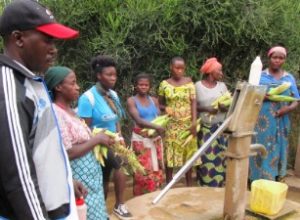
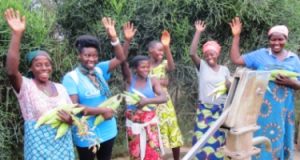
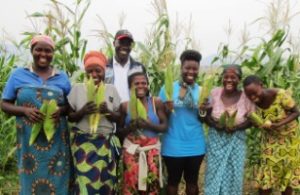
After developing the association, the Project Manager requested that the members start looking to find a field. All of them decided to look for a field in a place where there is water and a field which can be used right after the field is rented and, thereby, facilitate three cultivations during the year. Such a field was found; a large field, and it was rented for 700,000 BIF for one year. The rental agreement was signed between the landowner and the association officers and within sight of all of the members of the association. The association members worked diligently on preparing the field and the women started by planting soya, beans and then corn.
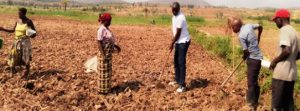
The first harvests were soya, beans and maize (corn). As promised, 50% of the harvests were shared with the beneficiaries and 50% was sold to get the money to continue cultivating crops. The beans were sold for eight hundred Burundi francs (800,000 BIF). With that money, they decided to rent another nearby field so they can continue to cultivate the corn. The second crop of corn was just about ready for harvesting at the time of our October visit.

BREEDING GOATS
At the beginning of the project, the Project Manager organized training on raising and breeding goats and using the manure for composting. With the crop cultivation well-established, the project has moved forward on the breeding of goats function that will contribute to self-support. The association officers recently purchased 9 goats that are owned by the association.
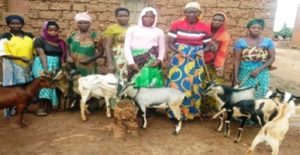
Each of the 9 beneficiaries were given a goat to shelter, feed and look after with assistance from a veterinarian. The first generation of kids will belong to the beneficiaries and when they have three or four goats they will be able to sell a goat for significant income for their families. The second generation of kids from the association’s goats will belong to the association and they can be sold to generate income for the association.
MICROFINANCING
The project has set up internal MICROFINANCING. All the members of the association (9 vulnerable women) contribute 1,000 BIF each week to their own self-help microfinancing, savings and loans group. The money is used to provide loans that must be repaid with 5% interest. The loans enable the beneficiaries to start small income-generating businesses. This will help the association members to solve some daily financial issues such as paying school fees for their children and paying health insurance fees for their families. This money will sometimes be used to assist and support the members with unexpected personal expenses. Already, some of the association members have taken loans in order to start income-generating activities at the NDAVA market centre.
SUPPORTING VULNERABLE WOMEN AND GIRLS TO IMPROVE THEIR SOCIO-ECONOMIC SITUATION BY FARMING POTATOES AND BREEDING PIGS IN MIGANO VILLAGE, BUKIRASAZI COMMUNE, GITEGA PROVINCE, Project Manager: Prosper NIYONGERE
INTRODUCTION
The implementation of this agriculture development project is going very well. The purpose of the project is to improve the health and socio-economic conditions of the female beneficiaries. The main functions are developing a self-help project association, farming potatoes, breeding pigs and microfinancing. The project aims at developing the capacity of the women, improving the quality of life of the beneficiaries and, thereby, enabling the association members to become self-supporting, self-managing, self-governing and self-sustaining.
DEVELOPING A SELF-HELP ASSOCIATION
This project recruited 8 vulnerable women comprised by orphan girls, widows and landless women whose ages are between 18 to 55 years old. The women were organized into a project association named “TUJE HAMWE” and meaning, “To Be Together.” To join the project and the association, each woman had to sign a contract, agreeing to adhere to the association’s rules and to work as a volunteer in order to serve the association members’ common interests. After establishing the project association, the Project Manager requested that the members elect the officers and three women were elected; a President, the Vice- President and the Treasurer/Secretary. The association was registered with the local administration at the colline level.
FARMING POTATOES
The Project Manager and three officers rented a large field and signed an agreement with the landowner in the witness of all of the association members and some representatives of the local administration. Potatoes are the preferred choice in this project location because they give a good harvest and can generate more money than other crops. The beneficiaries served as the voluntary workforce for the cultivation which included preparing the land, planting seed potatoes, fertilizing the field, weeding the field and harvesting the potatoes. The field required a considerable amount of preparation.
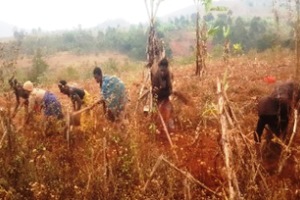
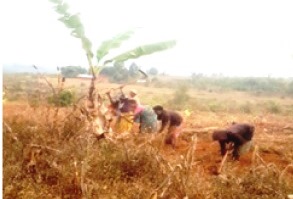
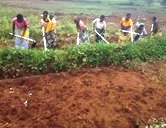
Once the field was prepared, the women planted the potatoes.
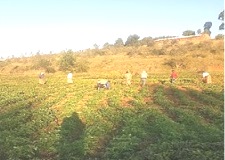
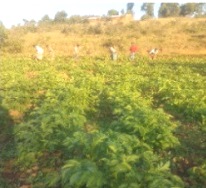
The project has had to two harvests of potatoes. For each harvest, association members shared 40% for themselves and their families, saved and stored 20% for seed and sold 40% for self-support of the continuation of crop cultivation. In addition, the association members worked for other community farmers to earn additional money to support the association with 40% of the income and support their families with 60% of the income.
BREEDING PIGS
Once crop cultivation was successfully established, some of the remaining grant money was used to build a pig pen and buy 3 adult female pigs for the association. The beneficiaries will feed and care for the pigs. From the first generation of piglets, one piglet will be distributed to each of the 8 beneficiaries and the association will keep 3 piglets and sell the rest for capital to be deposited in the association’s account. The association will keep the next generation of piglets as will the beneficiaries keep the first and subsequent generations of piglets from their first pig.
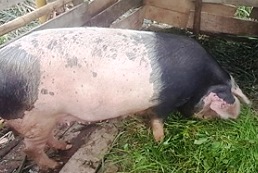
By the association owning, breeding and selling pigs, it will allow the association to develop capital to support, grow and sustain the project (an additional revenue stream). In the event of unexpected poor harvests and other challenges, the association must be able to ensure that crop cultivation and self-support can continue. To strengthen and expand the project, the association must have money and be able to generate income.
MICROFINANCING
The association members are organized into a savings and loans group (SLG). Initially, the collected money is kept into a small box with three locks and the keys are kept by three different members of the association. An account was opened at a microfinance organization for which three members are required to sign the checks to withdraw any money. Before any withdrawal, all association members need to meet and sign the minutes, approving the withdrawal of money. The Project Manager trained the association members on savings and loans methodology. The Project Manager trained the association members on Entrepreneurship and finance literacy. The beneficiaries are taking small repayable loans for income generation activities that benefit themselves and their families.
Please consider investing in agriculture development that works. For instructions on how to donate, please click on the tab above or use the link below.
Donations – Haley-McCready Outreach and Development Fund (haley-mccreadyfund.ca).