
This Newsletter provides progress reports on our first three Canadian initiated agriculture development projects. Following our project model, each project has developed a project association and all of the projects have become involved in cultivating crops, raising animals and microfinancing.
- Supporting Vulnerable Women and Girls to Improve Their socio-Economic Situation by Farming Potatoes and Breeding Pigs in Migano Village, BUKIRASAZI Commune, Gitega Province – Project Manager: Prosper NIYONGERE
- Cultivating Cabbages and Breeding Pigs for Poor and Vulnerable Women from Nderama Hill, Bukinanyana Commune, Cibitoke Province – Project Manager: Etienne KATABIRORA
- Supporting Vulnerable Women in Cultivating Corn and Breeding Goats at Ndava Hill in Buganda Commune, Cibitoke Province – Project Manager: Fabien BIMENYIMANA
All three projects have received all of their grant installment payments and all three projects are doing well as they approach the end of their first year. All of the projects have developed a self-help association and successfully cultivated crops, acquired animals and established microfinancing. The beneficiaries are well on their way to becoming self-supporting, self-managing, self-governing and self-sustaining.
Supporting Vulnerable Women and Girls to Improve Their Socio-economic Situation by Farming Potatoes and Breeding Pigs in MIGANO Village, BUKIRASAZI Commune, Gitega Province
Our Vision:
To see all widows, orphan girls and landless women of Migano Village achieving economic independence by doing income-generating activities in order to reach their family’s economic self-sustainability.
Our Mission:
Teaching and training vulnerable women to be gathered into saving and loans associations (VSLA), pursuing income-generating activities and using entrepreneurship and finance literacy skills as a way of being involved in economic production, cultivating crops, breeding pigs and microfinancing.
Project Purpose:
The purpose of the project is to improve the socio-economic situation of widows, orphan girls and landless women. The project aims at improving the quality of life of the beneficiaries by enabling the association members to become self-supporting, self-managing, self-governing and self-sustaining.
Project Objectives:
- To fight against poverty and its the causes
- To fight against hunger and its causes
- To help widows, landless women and orphan girls become socio-economically independent
- To increase the production of crops and animals
- To organize vulnerable women into self-help groups of savings and loans and become their own bosses
- To train 8 beneficiaries in entrepreneurship and finance literacy
- To significantly improve the self-esteem of the beneficiaries
Developing the Association
The project beneficiaries are 8 poor, vulnerable orphan girls, widows and landless women aged between 15 years old and 55 years old. The women have been organized into a democratic, self-help association and trained on how to grow potatoes, how to breed pigs and how to become economically independent through income generating activities, including microfinancing. The association members participate in every activity; they participate in suggesting new ideas, making decisions and contributing to all of the development work. The association is strong and working very well.
Cultivating Crops
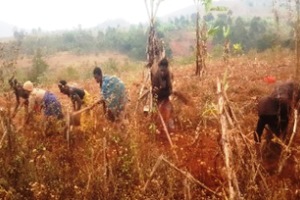
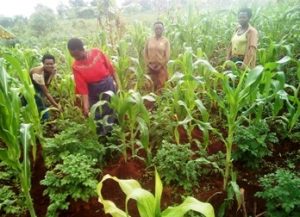
The women and girls have been assisted in renting land, buying seed potatoes, fertilizers and other materials. Every beneficiary has a new hoe. The beneficiaries have worked together to prepare the fields, plant seed potatoes, care for the potatoes and harvest the potatoes. The project has had to two cultivating seasons and two harvests of potatoes.
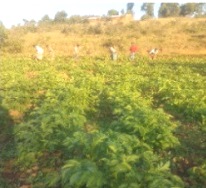
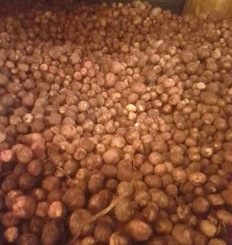
For each harvest, the association members share 40% of the food for themselves and their families, 20% is stored for seed and 40% is sold for self-support of the continuation of crop cultivation. In addition, the association members work for other community farmers to earn money; 40% of the money goes to support the association and 60% goes to support the beneficiaries and their families.
Breeding Pigs
The project beneficiaries have received some training in caring for pigs. The association has bought three female pigs, constructed pig pens and the women are taking good care of the pigs. The pigs are already producing valuable organic fertilizer to restore and enrich the soil.
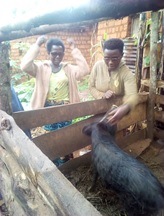
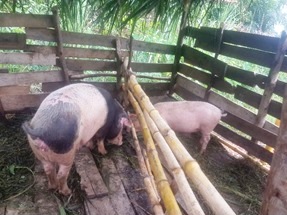
The pigs are expected to produce piglets and the beneficiaries are looking forward to the arrival of the piglets. When the piglets arrive, all 8 beneficiaries will be given a piglet of their own and these pigs will produce more piglets that will belong to the beneficiaries and their families. The association will retain three piglets and the rest will be sold to generate income for the association.
The association will own all of the next generations of piglets as will the beneficiaries own the next generations of their pigs. Accordingly, the pigs will provide an ongoing, valuable source of income for the association and the beneficiaries and their families.
Microfinancing
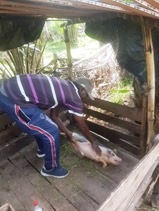
The microfinancing activities; the saving and loans activities, are done once a week during a meeting on Monday mornings. The photograph below shows the beneficiaries discussing the savings and loans before heading to the field to prepare for planting.
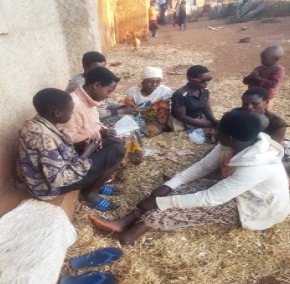
The main objective of these activities is to get the association to become self-financing in the second year and beyond. The association must be able to rent land and support ongoing self-supporting crop cultivation. The microfinancing will also permit the beneficiaries to obtain small, repayable loans to conduct individual income-generating activities.
Project Manager’s Statement
We are committed to working hard to reduce food insecurity and making Burundi a better place to live even if we always face challenges related to financial support which is one of the setbacks preventing us from moving the way we wanted. This is our time and opportunity to let you know that the project activities are progressing very well.
We really salute the commitment of John; you have been a channel of blessings to us.
We express our gratitude to Canadian Haley-McCready Outreach and Development Fund for its support and commitment to helping our community. Thanks to John and his team.
We appreciate in a mighty way all beneficiaries for their commitment to transforming our nation.
Prosper NIYONGERE
Cultivating Cabbages and Breeding Pigs for Poor and Vulnerable Women from Nderama Hill, Bukinanyana Commune, Cibitoke Province

Recently, Etienne successfully defended his thesis at Hope Africa University and graduated on Friday, February 3, 2023 with a Master’s Degree in Theological Studies. Congratulations to our volunteer Project Manager.
Association
For some time, the 8 poor and vulnerable project beneficiaries have been organized into a self-help association, appropriately named the DUFASHANYE Association in Kirundi and “Let’s Help Each Other in English.” All of the association members signed an agreement, elected officers and are working together and helping each other.
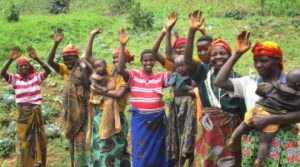
As a democratic organization, all of the association members attend and participate in the meetings and contribute in making decisions. The association is functioning well and is on its way to becoming self-supporting, self-managing, self-governing and self-sustaining.
Cultivating Crops
After the first harvest of cabbage, a portion of the crop was sold to support the continuation of self-supporting crop cultivation.
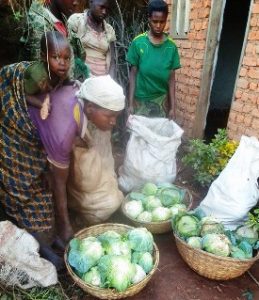
Following the first harvest, the project beneficiaries planted cabbage plants for the second cultivation season.
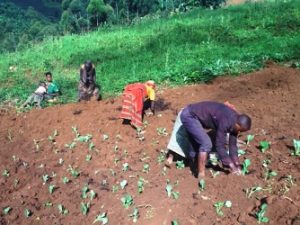
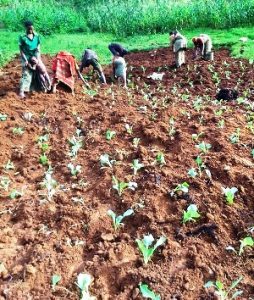
After harvesting the cabbages from the end of September until mid-October, the women shared 50% of the harvest and the association sold 50% of the cabbages. The sharing and selling will continue with the future harvests.
Breeding Pigs
Once self-supporting crop cultivation was established, most of the remaining grant money was used to purchase animals and now the project has 8 female pigs that belong to the association and are cared for by the beneficiaries. The pigs are expected to reproduce. From the first generation of piglets, each woman will be given a piglet so both the association and the beneficiaries and their families will be involved in raising and selling pigs as an important means of generating income.
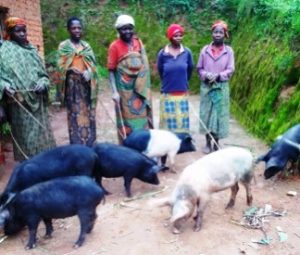
Of course, the pigs are already contributing to the project because they are a very good source of local organic fertilizer for restoring the soil and increasing the productivity of the cultivation of cabbage. The beneficiaries are looking forward to the pigs producing many healthy piglets.
Microfinancing
The members of the DUFASHANYE Association contribute 5OO BIF per week to the microfinancing fund. The members prefer to make loans among themselves by using the collected money. All the loans will be repaid with interest of 5%. The microfinancing account has accumulated a total amount of 96,000 BIF. Four members have already taken loans for a total of 80,000 BIF.
Testimony
Jacqueline HACIMANA, Member of the DUFASHANYE Association
I take the time for thanking Etienne KATABIRORA who made the effort to organize us 8 women to form our Association called DUFASHANYE, meaning “Helping Each Other.” Etienne brought us together and trained us on the importance of working together and helping each other.
After getting to know each other, we began working together. We are helping each other in cultivating crops; we have fields of cabbages and we are raising animals; we have 8 pigs. We are hoping that our Association will continue to develop. I thank all my dears who have accepted to be in this Association because we were in difficulty but now we are becoming self-supporting, self-managing and getting our daily food and basic needs in life without having to beg.
Supporting Vulnerable Women in Cultivating Corn and Breeding Goats at Ndava Hill in Buganda Commune, Cibitoke Province

Our volunteer Project Manager defended his thesis and just graduated from Hope Africa University with his Master’s Degree in Leadership and Nursing Educational. Congratulations Fabien!
Association
All 9 poor and vulnerable women are available for and participate in activities according to the rules of the association. The association (BIRASHOBOKA, meaning “It’s Possible”) has been registered at the colline level. The association members are actively working and making their contributions to the growth of their association to become self-supporting, self-managing, self-governing and self-sufficient.
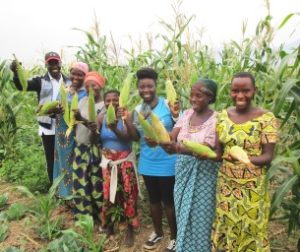
Cultivating Crops
From the first season, the harvest was comprised of Beans, Soya and Maize (corn). As planned, the association’s members decided to sell part of the harvest, share part of the harvest and store part of the harvest as seed for future cultivations.
Harvest Results for First Season
|
Total Harvest |
Total Sold | Total Shared |
Total Stored for Seed |
|||||
|
In kg |
Value in BIF | In kg | Cost in BIF | In kg | Value in BIF | In kg |
Value in BIF |
|
| Beans |
488 |
1122400 | 362 | 832600 | 90 | 207000 | 36 |
82800 |
| Soya |
56 |
84000 | 0 | 0 | 0 | 0 | 56 |
84000 |
| Maize |
212 |
530000 | 100 | 250000 | 90 | 225000 | 22 |
55000 |
| TOTAL |
756 |
1736400 | 462 | 1082600 | 180 | 432000 | 144 |
221800 |
In this amount, association’s members rented another field in order to extend the association’s agriculture activities in Buganda Commune, Cibitoke Province. They used the rest of the money to cultivate two fields (one to cultivate maize and the other to plant rice). They planted the rice on this January 11th, 2023.
Breeding Goats
With the money of the second installment, the association purchased nine goats that belong to the association. They are actually healthy and the beneficiaries are caring of them. They are benefiting from the manure and the related increase productivity in their small fields.
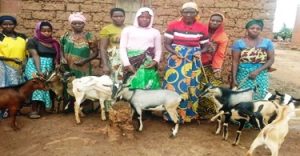
When the goats have baby goats, the first baby goats will belong to the beneficiaries and the mother goats will continue to belong to the association. The raising and selling of goats will become a very important part of the necessary income generation for the association and the beneficiaries and their families.
Microfinancing
The association members are organized into a self-help savings and loans group. Each association member contributes a thousand Burundi francs (1000 BIF) as a weekly contribution. The money is used to provide low interest repayable loans for the beneficiaries to pursue personal income generation activities.