
The Canadian Haley-McCready Outreach and Development Fund is pleased to announce that we now have 4 new agriculture development projects.
The Haley-McCready Outreach and Development Fund (H-MODF) received 5 project proposals in response to its Call for Proposals 2025. To evaluate the proposed projects, all 5 would-be Project Managers were interviewed by the Burundi Advisory Committee. Four of the proposed projects were considered to be worthy of additional consideration. After some improvements were made to the proposed projects, the Burundi Advisory Committee reviewed the proposals again and recommended that all of the 4 projects receive our one-time, start-up development grant.
The Board of Directors reviewed the recommendations, the project proposals, the project summary descriptions and approved grants for all 4 projects. The 4 new agriculture development projects have 4 new Project Managers and all of them are Graduates of the Hope Africa University’s Agriculture Program.
So, after our fourth Call for Proposals, the H-MODF now has:
- A total of 17 agriculture development projects
- A total of 20 Project Managers
- A total of 15 Project Managers who are Agriculture Program Graduates
- Our first projects in MAKAMBA, NGOZI and KIRUNDO Provinces
Four New Agriculture Development Projects:
- Cultivating Crops and Raising Goats for Vulnerable Women from Rusekabuye Colline, Musigati Commune in Bubanza Province – Project Manager: Celestin BIGIRIMANA
- Supporting Vulnerable Women in Cultivating Crops and Breeding Pigs at Mukungu Colline in Nyanza-Lac Commune in MAKAMBA Province – Project Manager: Edyssa NIBITANGA
- Cultivating Vegetables and Raising the Goats for Vulnerable Women in NGOZI Province, Busiga Commune, Rukeco Zone and Mpondogoto Colline – Project Manager: Elysé NDIHOKUBWAYO
- Cultivating Crops and Breeding Goats for Vulnerable Women from KIRUNDO Province, Bugabira Commune in Kiri Colline – Project Manager: Evariste NSANZUBUMWE
Four Project Summary Descriptions:
Project Title:
Cultivating Crops and Raising Goats for Vulnerable Women from Rusekabuye Colline, Musigati Commune in Bubanza Province
Project Manager:
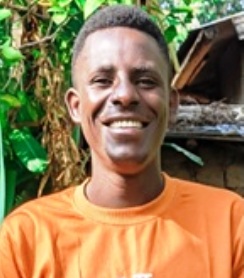
Celestin BIGIRIMANA holds a Higher Technician Certificate in Agriculture and Zootechnics from Hope Africa University, completed between 2021 and 2023. His academic background reflects a solid foundation in Agriculture and Zootechnics and prepares him well for roles in agricultural development and livestock management. Celestin is an active church member from the Free Methodist Church in Ntamba, Musigati commune and a local advisor for agriculture.
Introduction
Bubanza is one of the western provinces of Burundi. The province is commonly said to be located in the Imbo Region. It is fertile and good to produce some food like corn, beans and peanuts once they are planted in a good season. The women of Rusekabuye Colline in Musigati Commune are hard workers and fighters. They have learned to survive for themselves and for their children day-by-day, year-in and year-out despite the great challenges that surround them.
Farming is the major source of income for the community women. But since they have no land of their own to exploit, they have to go and find people for whom they can farm lands and these people will in return give them a daily allowance. However, the amount received is very little considered the efforts that the work requires. They spend many hours of the day with hoes cultivating the land under a heavy sun or rain only to receive some little amount of money to feed their children for the day. That is why after finishing the Agriculture and Zootechnic Institute at Hope Africa University, and having knowledge about Haley-McCready Outreach and Development Fund, Celestin decided to develop this project proposal in order to respond to the Call for Proposals 2025.
This project will help to respond to the needs of Rusekabuye vulnerable women in their association which will become self-sufficient, self-managing and self-governing. This project aims to improve the living conditions of vulnerable women in the province of Bubanza, Musigati Commune, Ntamba Area, Rusekabuye Colline through the implementation of agricultural and livestock activities. With a focus on beans, corn and soybean crops, as well as goat farming, the project will provide stable income and improve food security for vulnerable women.
Developing the Association
At the start, we will consider collaborating with the local church pastor and the local administration of Rusekabuye Colline to help me to select 10 vulnerable women. The selected women will be the target beneficiaries of this project of Cultivating Crops and Raising Goats for Vulnerable Women. After their selection and after signing the agreement contract, the vulnerable women will start to work together in the project association named TURACAFISE ICIZERE; We Still Have Hope.
After the agreement, different sessions of training about sustainable women associations in the community, the roles of women in contributing to the family development, the common rules for saving and loans, social cohabitation, income-generating activities will be undertaken. After the training sessions, the association members will elect their officers made up of the President, the Vice-President and the Secretary-Treasurer. The officers will be responsible for managing the association, reporting to the project manager, planning and preparing the weekly meeting, facilitating the association members for the different daily issues, and coordinating the daily activities of the association. After all, the elected Secretary will be given a register book to record every minute of each meeting done in the association.
The project manager will oversee communicating with the President and organizing the field visits twice a month. He will also follow up the daily life of the association especially during the important periods for cultivation like renting the land, preparing the land, buying the seeds and planting. The beneficiaries will oversee following some important skills relevant to their self-sustainability, self-sufficiency, and self-governance. Also, the weekly meetings will reinforce the relationship among the beneficiaries of the project association.
Crop Cultivation
At the beginning and to initiate crop cultivation, the project grant money will be used to rent two fields of about 1 hectare. All the beneficiaries will work together by preparing the field. The association will use the money to rent land, buy fertilizers, buy insecticides and other needed materials. The members will participate in the planning of all the activities concerning their association. Through capacity development trainings, the beneficiaries will learn higher techniques of planting corn and beans and methods of increasing and managing the harvest.
To ensure harvest good management, the beneficiaries will share 50% (for households’ food), sell 40% (for current needs of the association and renting the field) and save 10% (for buying seeds of the next cultivation season) for each harvest category. With this income for the first year, we hope the crop cultivation to become self-supporting and self-sustaining.
Breeding Goats
Once agricultural activities become self-supporting, well-managed, and sustainable, the association will use the available funds to purchase 10 female goats for the association. Ten women members of the association will each receive one female goat and will commit to feeding, caring for, and protecting them from theft, as their local contribution to the goat breeding initiative within the association. Each woman will also receive a designated amount from the project to build an individual goat shelter, in order to provide proper housing for her goat. This will ensure better breeding conditions and contribute to the good health of the animals.
When the goats give birth for the first time, the first kid and its kids will belong to the woman beneficiary for household-level rearing. However, all kids born afterward to the firsts 10 goats will be considered common property of the association. This will allow the association to expand and benefit more women through the extension of the project. By working together in a spirit of unity and strong participation, the members will be prepared to become self-reliant, capable of managing, organizing, and sustaining their activities independently.
Microfinancing
The project will organize a self-help microfinancing group for income-generating purposes. In the beginning of the microfinancing, the start-up amount of one hundred thousand Burundi Francs (100,000 BIF) to help the beneficiaries to start getting the loans. This amount will be kept on the bank account until when the beneficiaries understand the income generating activities to initiate. The loans will be paid back with the interest of 3%. Each participant commits to making a weekly contribution of 500 BIF. The collected funds are kept in a metal box equipped with three locks. This box is placed under the responsibility of an association member, while each key is entrusted to a different member of the group who does not hold a leadership position, in order to ensure transparency and security.
When the group wishes to make a withdrawal, a meeting will be convened to review the reason for the request. After discussion, the members vote and sign an authorization if the request is approved. No withdrawal can be made without this collective process. This model promotes financial discipline, solidarity, and economic inclusion, while providing a local and effective solution to deal with emergencies and to develop small income-generating projects.
Project Title:
Supporting Vulnerable Women in Cultivating Crops and Breeding Pigs at Mukungu Colline in Nyanza-Lac Commune in Makamba Province
Project Manager:
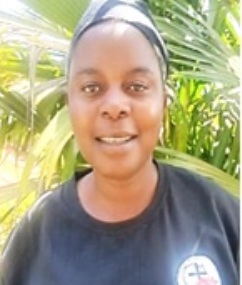
Edyssa NIBITANGA holds a Higher Technician Certificate in Agriculture and Zootechnics from Hope Africa University, completed between 2023 and 2025. Her academic background reflects a solid foundation in Agriculture and Zootechnics and prepares her well for roles in agricultural development and livestock management. Her commitment to learning and applying agricultural modern techniques demonstrates her for future growth in project management.
Introduction
Makamba is one of eighteen provinces which in Burundi. It borders Lake Tanganyika to the west and Tanzania to the south and east. Makamba has 6 communes among which many are refugees returned to Tanzania after a civil war happened in 1993 and political instability in 2015. The more affected communes are Nyanza Lac and Kayogoro where the population is not stable to do some developments activities. The population of that area is more attracted by other countries, which is a second source of poverty.
To give support to vulnerable women of Mukungu Colline, is an important means to reduce rural poverty, to improve food security, to reinforce social cohesion, to create a positive hope for their future and to help them to become socially and economically independent through the integration of income generating activities. The main purpose of this project is to help vulnerable women of the indicated area to become self-supporting, self-managing, self-governing and self-sustaining through farming of different crops and breeding pigs to improve their socio-economic conditions. To achieve the expected result, the project will put together 10 vulnerable women in the association and by promoting different crop cultivation and agro-pastoral activities. One thing to mention is that this project will be the first one of H-MODF started in Makamba Province. We hope this project will be the solution and key to development of vulnerable women of Mukungu Colline.
Developing the Association
In developing association, the first thing to underline is some techniques and methods that will be used in developing the association. Practically, at the beginning, the local leaders will meet to explain about the project Dukorere Hamwe (To Work Together) Association, its objectives and its specific mission for the interest of the community. The second element will be focused on the selected beneficiaries who will be given the whole picture of the association and the requirements to adhere. The direct beneficiaries of the project will be 10 vulnerable women from Mukungu Hill in Nyanza Lac Commune aged to 24 to 38 years old. The beneficiaries will democratically elect a President, Secretary and Treasurer of the association. The association will be registered at the commune level. In addition, all beneficiaries will be trained in leadership, project management, entrepreneurship and all other techniques judged useful for the interest of the association. Beneficiaries’ meetings will be organized every Tuesday; a day on which members will discuss weekly activities. The association expected to be a self-help organization that will help all the women to alleviate poverty in their lives and the lives of their family members.
Cultivating Crops
By considering the quality of the soil, maize (corn) is the most profitable crop at Mukungu that the association will cultivate. As a project manager of this association, together with the beneficiaries, we’ll identify and select a suitable land for cultivation about a half hectare and sign a rental contract in the presence of all beneficiaries. Furthermore, cultivation materials, especially hoes, will be purchased and distributed to the beneficiaries. All association members will participate in crop cultivation activities, including composting, planting, fertilizing, weeding and harvesting. For each harvest, 40% of the harvest will be shared among the beneficiaries; 60% of the harvest will be sold to prepare for the coming season. No conservation of seeds will be done. All the selected seeds will be bought from ISABU institution. In addition to that, members will be encouraged to do other generating activities by working for other farmers.
Breeding Animals
For the Dukorere Hamwe Association, the chosen animals to breed are pigs. Pigs are among domestics’ animals whose growth is quick and resistant to illness. In our association, we will buy 4 adults’ pigs 1 male, and 3 females belong to the association. However, the first generation will be distributed to the beneficiaries.
One important thing to realize is that when the pigs belong to the association and kept them in one place, it is a way to make its sustainability and helps to get enough manure for fertilizing crops. It is also another way to ensure their security and health of the pigs. Although the association members can use manure from pigs, we sometimes note that the manure from pigs cannot cover all the cultivation costs needed after the end of the grant. In that case, having animals belong to the association, members could decide to sell one or two pigs to continue the activities and the association will remain stable.
Microfinancing
The association members will have meetings each Tuesday and Friday to discuss association evolution, collective work and give their weekly contribution of 500BIF. A member’s contribution is the most important element that shows their commitment to activities. For the security of the money, an account with three signatories will be opened in COOPEC. Members will also have access to microcredit loans after the presentation of a small income-generating development project. The loans must be repaid back with 5% of interest per month. The generate income will allow the women to accomplish their current needs in their families. The beneficiaries will be encouraged to work for other farmers to get more money to save for microfinance purposes. Whenever they work for other farmers, 70% of the money earned will be shared among the participants and 30% will be saved in the microfinance.
Project Title:
Cultivating Vegetables and Raising the Goats for Vulnerable Women in Ngozi Province, Busiga Commune, Rukeco Zone and Mpondogoto Colline
Project Manager:
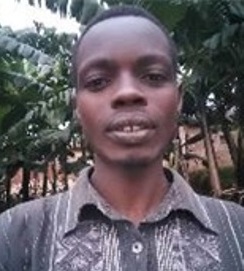
Elysé NDIHOKUBWAYO holds a Higher Technician Certificate in Agriculture and Zootechnics from Hope Africa University, completed between 2021 and 2023. His academic background reflects a solid foundation in Agriculture and Zootechnics and prepares him well for roles in agricultural development and livestock management. His commitment to church activities in the Free Methodist Church of Burundi and support from the church leaders qualifies him for better application of acquired experience and skills in Agriculture and animal husbandry.
Introduction
The province of Ngozi is in the north of Burundi. Busiga Commune is one of its 9 communes. Busiga Commune is located next to the Kayanza Commune before Ngozi town. Mpondogoto Colline is located near Kabuye Colline of Kayanza Province on the RN1. As of the 2008 census, it had a population of 65,143, predominantly rural.
In Ngozi Province, particularly in the Busiga Commune, vulnerable women face significant challenges related to food security, economic instability, and limited access to resources. Many lack the skills and resources necessary for sustainable agricultural practices, which exacerbates poverty and vulnerability. The need for sustainable livelihoods and empowerment of these women is critical to fostering community resilience and improving their living conditions. The proposed project aims to cultivate crops, breed goats and develop microfinancing as three strategies for enhancing food security and providing economic opportunities. By integrating sustainable agricultural practices and livestock management, we aim to create a holistic approach that empowers women, improves nutrition, and generates income, which can further enhance their social status and community involvement.
Developing the Association
To set up the association, the following steps will be strictly observed. The initial step of the project involves consulting with the local Free Methodist pastor to obtain permission to work with selected beneficiaries, who are members of the church. Following this, a meeting will be held with vulnerable women to clearly explain the objectives and expected outcomes of the project. To ensure active participation and accountability, rules and regulations will be established, encouraging all members to attend weekly meetings regularly. In addition, the beneficiaries will receive training in entrepreneurship to equip them with essential business skills.
The project will also include sessions on financial management and group development to strengthen the association’s internal capacity. To support smooth governance, an executive committee will be elected, consisting of a President, a Secretary-Treasurer, and an Advisor. Finally, a bank account will be opened at COOPEC, with a three-signature policy for withdrawals. The authorized signatories will include the Project Manager, the President, and the Secretary-Treasurer, ensuring transparency and shared responsibility in financial matters.
Cultivating Crops
At the beginning and to initiate crop cultivation, the project grant money will be used to rent a field of 1 hectare, one half for cultivating corn and the other half for beans. All the beneficiaries will work together by preparing the field. To ensure harvest good management, the beneficiaries will be distributed 50% of the corn and beans and peanuts harvest, 10% will be saved for seed and other 40% will be sold and the money will be kept by the association to support ongoing corn, and beans cultivation. The association will use the money to rent land, buy fertilizers and other needed materials. The members will participate in the planning of all the activities concerning their association. Through capacity development trainings, the beneficiaries will learn higher techniques of planting corn and beans.
The beneficiaries will harvest the field of corn and beans. We hope to harvest 4000 Kg of corn, 2000 kg of beans. The beneficiaries will share 50% (for households’ food), sell 40% (for current needs of the association and renting the field) and save 10% (for buying seeds of the next cultivation season) for each harvest category. With this income for the first year, we hope the crop cultivation to become self-supporting self-ma and self-sustaining.
Breeding Goats
Once crop cultivation is self-supporting, the project manager (agronomist) will meet the beneficiaries for the capacity development for modern practices for breeding goats. With the help of the project manager who is skilled in animal wellbeing, the association members build pens and will select and purchase 10 healthy adult goats that belong to the association. Each beneficiary will contribute to caring for and feeding of one of the association’s goats. When the goat produces a baby goat (the first generation), the beneficiary will own the kid and its kids. When the association’s goats produce more kids (the second generation), they will belong to the association. In time, the association and the beneficiaries with have goats which can be sold to produce income to support the ongoing expenses of the association (e.g., fertilizer and seeds) and the needs of the beneficiaries and their family members.
Microfinancing
This project entitled project ‟MUKENYEZI KANGUKA DUKORE’” intends to promote good practices for microfinancing; saving and loans. Therefore, the beneficiaries will contribute 500 BIF per week. The weekly amount collected will be kept in the box with three locks. The box will be kept by the Treasurer- Secretary. The keys are kept by different association members who are not among the officers. In the case of the need for a withdrawal whether on the bank account or in the microfinance box, the officers appeal to the meeting and state the needs. The association members hold a meeting and sign for a withdrawal.
The association members will be encouraged to start some income-generating activities to become socio-economic independent. When an association member needs to start a small business for every understandable reason, the association will vote for the distribution of a refundable loan with an interest of 5%. For the association to have a good start-up in microfinance, the project manager intends to allocate 30000 BIF in microfinance as a start-up grant. The money will always be kept for microfinance purposes.
The association members will also be encouraged to work for a general income activity such as working for other farmers, buying and selling, etc. Thirty percent (30%) of the income will be kept in the association account and 70% will be shared among the members involved in such activity.
Project Title:
Cultivating Crops and Breeding Goats for Vulnerable Women from Kirundo Province, Bugabira Commune in Kiri Colline
Project Manager:
Evariste NSANZUBUMWE holds a Higher Technician Certificate in Agriculture and Zootechnics from Hope Africa University, completed between 2021 and 2023. His academic background reflects a solid foundation in Agriculture and Zootechnics and prepares him well for roles in agricultural development and livestock management.

Introduction
In Kirundo Province, particularly in the Bugabira Commune, vulnerable women face significant challenges related to food insecurity, economic instability and limited access to resources. Many lack the skills and resources necessary for sustainable agricultural practices, which exacerbates poverty and vulnerability. The need for sustainable livelihoods and empowerment of these women is critical to fostering community resilience and improving their living conditions. The proposed project aims to cultivate crops, breed goats and microfinancing as three strategies for enhancing food security and providing economic opportunities.
Developing the Association
This project intends to gather ten (10) vulnerable women from Kiri Area within the KAZOZA KEZA (meaning GOOD FUTURE). After the women have accepted and signed the association agreement, they will participate in some training on social cohabitation, savings and loans and income generating activities; participation in these sessions will be required for every beneficiary. After these sessions, the women will be ready for the project to start. They are bound to work together in the association. The association members will elect their officers for the good organization of the activities. The association will be led by the President, Vice-president, Secretary-Treasurer and Advisor. Their main duties will be to plan and prepare the weekly meetings, facilitate participation of all of the association members and address daily issues and coordinate the daily activities of the association.
After electing the officers of the association, the Secretary-treasurer will be given a register book to record the minutes of each meeting. The Project Manager will do his best to back check all the minutes to understand together how the activities are running. In such process, every activity that will happen in the association will be easily known. Once they are set together to work as an association, they must know that they are already one; they will win together or lose together. Each one of them must give out the best to the team.
During field visitations, the Project Manager will continuously counsel the women about teamwork and the benefits that derive from it. The field visitation will normally happen three times per month but at least once a month. To strengthen the association members, together with the officers, the Project Manager will organize different sessions for building capacities. These sessions will be beneficial to the women because they will provide important skills relevant to their self-sufficiency, self-governance and self-sustainment. Also, the weekly meeting will reinforce and strengthen the relationships between the beneficiaries and the project association.
Cultivating Crops
To initiate crop cultivation, the project grant money will be used to rent two fields of about one hectare: one half of each hectare for cultivating corn and the other half for beans and peanuts. Through capacity development training, the beneficiaries will learn higher techniques of cultivating corn, beans and peanuts. All the beneficiaries will work together by preparing the field and taking care of the crops. For all the harvests, 50% will be shared with the beneficiaries, 10% will be saved for seed and the other 40% will be sold and the money will be kept by the association to support ongoing crop cultivation. The association will use the money to rent suitable land, buy fertilizers and other needed materials to support ongoing crop cultivation and to become self-supporting and self-sustaining. For additional income, the association members will be encouraged to work for other farmers and split the income between the association and the women who participated in the work.
Breeding Animals
When the crop cultivation becomes self-supporting, the second instalment of the grant money will be used to purchase ten healthy goats which will belong to the association. The beneficiaries will be responsible in caring for them and feeding them. We believe that those goats will produce enough manure to fertilize their respective portions of land.
As a Senior Technician in Agriculture and Animal Husbandry, I will help the beneficiaries to do the sanitary treatment of the animals that are raised in their homes. Later, when the goats reproduce and multiply, every woman will receive baby goat to own and raise for their household. As the association and the association members have more goats, some will be sold to produce much-needed income for the association and the women and their families.
Microfinancing
The association members will be trained in savings and loans methodology. Each member will be requested to save 500BIF in the other week of the month (1000BIF per month). The money collected will be kept in a small box with three locks whose keys will be kept by three different members of the association. To ensure transparency and accountability, the association members will elect three trustees who will keep the locks. These key holders are different from the officers of the association. In addition, an account will be opened at a microfinance on which three members will mandatorily sign the check to withdraw money after the approval of the members. Before withdrawal, all the association members will meet and sign the minutes related to money withdrawal.
To increase the income for the association and its members, the association members will be encouraged to work for other people (probably farmers) to earn some money to support the association with 40% and their families with 60% of their income. This money will be given to the association to increase the money for loans and ensure the association’s activities are smoothly running.
Also, to mobilize the association members to invest in their own development to break the cycle of poverty, a sum of 46 400 BIF from the start-up grant will be deposited to the account of the association to increase their capital to allow them to hold small businesses. After one month of savings, each association member will have a right to borrow at least 10 000 BIF to start up a small business and go back to the association within three months with an interest of 5% per month. This money will be put together with their shares but will always be monitored. On each sharing day (after twelve months of savings and loans) this sum of 46 400 BIF will not be shared, but they will share the interests generated.
If you would like to invest directly in poverty-alleviating agriculture development that works, please visit Donations – Haley-McCready Outreach and Development Fund.