
The Canada-based Haley-McCready Outreach and Development Fund (H-MODF) has provided one-time, start-up development grants to seven agriculture development projects. This Newsletter provides brief updates on the four projects that received their first installment of money in 2023.
Hope Africa University (HAU) now has a two-year Agriculture Program. Thanks to the support and involvement of the new Head of the HAU Agriculture Program, these four projects are special.

Yes, the four projects are special because they all involve HAU Agriculture Program Graduates who are able to train and support the project beneficiaries on using more productive agriculture methods.
- Empowering Vulnerable Women from Kayanza Province, Kabarore Commune at Caratsi Hill by Cultivating Crops and Breeding Pigs (2023): Project Manager, Abbie RUBUMBA, Connected Agriculture Program Graduate, Christine NININAHAZWE
- Cultivating White Potatoes and Cabbage and Breeding Pigs for Vulnerable Women from Gitunga Hill, Muyebe Zone, Kayokwe Commune, Mwaro Province (2023), Project Manager and Agriculture Program Graduate: Alfred BIKORIMANA
- Supporting Vulnerable Women from Bujumbura Province, Isale Commune, Nyakibande Hill by Cultivating Corn and Beans and Breeding Goats (2023), Project Managers and Agriculture Program Graduates: Christian NIYIBIKUNZE and Nelly SIBOMANA
- Cultivating Maize and Soya and Breeding Pigs for Vulnerable Women from Rugombo, Munyika II, Cibitoke Province (2023), Project Manager and Agriculture Program Graduate: Mathieu NIYONKURU
Empowering Vulnerable Women from Kayanza Province, Kabarore Commune at Caratsi Hill by Cultivating Crops and Breeding Pigs
The association called MUKENYEZI IKANGURE which means “Awaken Woman” has 10 female members. They do their work and hold meetings every Monday. Through capacity development, the project is expected to become self-governing, self-sustaining and, hopefully, self-replicating.
For the crop cultivation function and with the expertise of Christine NININAHAZWE, the Connected Agriculture Program Graduate, the women planted maize (corn) in both of their two large rented fields. The harvesting is expected in early March and the 50% of the harvest will be shared among the members, 10% will be saved for seed and 40% will be sold to support the continuation of crop cultivation.
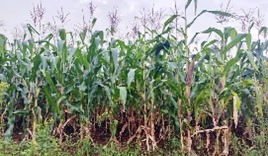
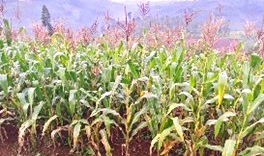
As soon as we know that the crop cultivation function will be self-supporting, the second installment of grant money will be provided so the association can purchase pigs and begin breeding pigs.
For the microfinancing function, the association already has 314,000 BIF that is available as savings and can be used for income-generating repayable loans and helping beneficiaries who need special assistance.
Cultivating White Potatoes and Cabbage and Breeding Pigs for Vulnerable Women from Gitunga Hill, Muyebe Zone, Kayokwe Commune, Mwaro Province
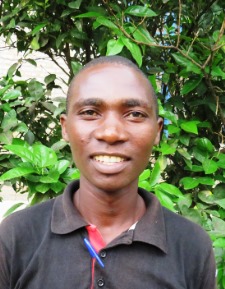
The association of 8 female members is well-established and working well as a self-help group. The project is located very close to another project that received a grant from the US-based Haley McCready Outreach and Development Fund. The two Project Managers are helping each other; Alfred BIKORIMANA, an Agriculture Program Graduate, helps both projects by introducing more productive agriculture methods, and Liliane BOTOYI helps both projects by introducing sound project management practices.
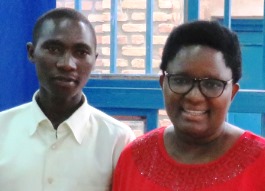
For the crop cultivation function, Alfred and the beneficiaries chose potatoes. After planting potatoes, the beneficiaries kept a close eye on the field, continuing the activities of weeding, hoeing and fertilizing.
By late December, the potatoes had grown and were harvested.
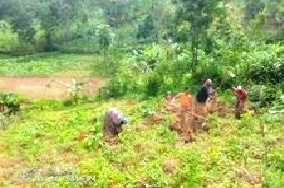
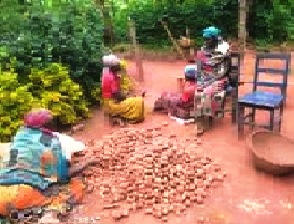
As planned, 40% of the harvest was shared with the beneficiaries, 10% was stored for the second growing season and 50% was sold to ensure crop cultivation can be continued on a self-supporting basis. The money was deposited in the association’s savings account.
For the animal husbandry function, the project association plans to buy and breed pigs. As soon as the crop cultivation is considered to be self-supporting, the project will receive the second installment of grant money. The beneficiaries are looking forward to the acquisition of the pigs because the manure will be immediately valuable for improving the project’s composting.
As far as the microfinance function is concerned, the association members now have 70,000 BIF. The money is in circulation for repayable personal loans and loans for income-generating activities.
Supporting Vulnerable Women from Bujumbura Province, Isale Commune, Nyakibande Hill by Cultivating Corn and Beans and Breeding Goats
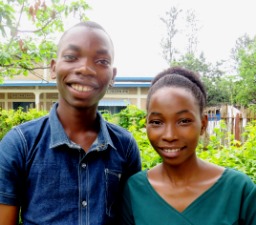
The Project Managers have successfully organized a self-help association of 8 women who will be the beneficiaries of the agriculture development project. It will take some time but the project is designed to become self-supporting and self-managing.
The crop cultivation function was delayed in starting. By the time the project received its first installment, the best fields had already been rented by other parties. However, now a field has been rented and the beneficiaries have prepared the field, purchased manure and planted beans.
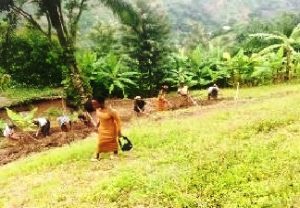
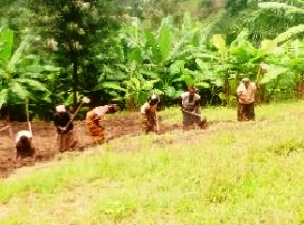
Part of the harvests will be shared with the beneficiaries and their families, some will be stored for seed and some must be sold to ensure that the continuing crop cultivation is self-supporting.
As the association develops, the project will become involved in breeding goats and establishing microfinancing.
Cultivating Maize and Soya and Breeding Pigs for Vulnerable Women from Rugombo, Munyika II, Cibitoke Province
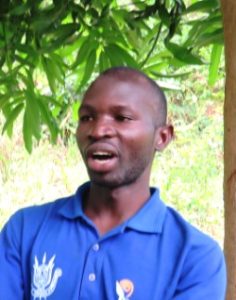
DUHINDURE KAZOZA association (which means “Change Our Future”) is made of eight female members of 20-45 years old. The beneficiaries have received training on the importance of working together and they value spending time together and sharing experiences with other association members. The association has meetings once a week.
For crop cultivation, the association rented two fields; both are 1/3 of one hectare). In consultation with Mathieu, it was decided to cultivate maize and soya (corn and soya beans). The corn has already been harvested.
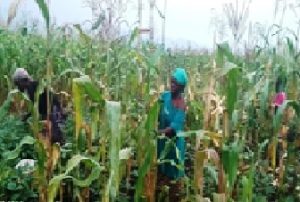
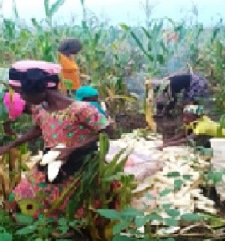
From the harvests, the beneficiaries will share 50%, sell 40% and save 10% for seeds. The association already have what they need for the second planting season.
For the animal husbandry component, the project association plans to purchase and breed pigs as soon as the crop cultivation has become established as self-supporting. The Project Manager, an Agriculture Program Graduate, intends to train the beneficiaries in selecting pigs, building pig pens and feeding and caring for pigs.
For the microfinancing component, each member of the association contributes 500 BIF for capital and 100 BIF for social assistance per week. The collected money is kept in a box with three locks. The box is kept by the Treasurer-Secretary and the keys are kept by three different association members who are not among the officers.
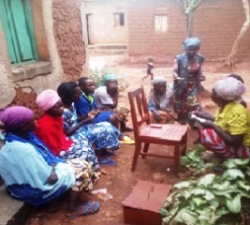
The capital is being used for loans to support small income-generating activities and the money must be repaid with 5% interest.