
So, we have some great news about very important developments on development in Burundi. The Haley-McCready Outreach and Development Fund (H-MODF) has worked in association with the Free Methodist Church of Burundi (the Church), Hope Africa University (the University) and Friends of Hope Africa University (Friends) right from the beginning. Dr. John McCready is an Adjunct Professor and Senior Advisor on Development with the University; Dr. McCready and the H-MODF have a Memorandum of Understanding with the University; and, the H-MODF, through another Memorandum of Understanding, is a Partner Organization with the University and its Agriculture and Zootechny Program (AZP).
During the past year, the Canadian Haley-McCready Outreach and Development Fund (H-MODF) has instigated two huge and very important developments that have the potential to begin to produce significant increases in agriculture production in Burundi. The first development began with Dr. McCready identifying and gaining access to nearby crop cultivation land and continued with Dr. McCready recruiting and to involving Foundations for Farming in Hope Africa University’s Agriculture and Zootechny Internship Program.
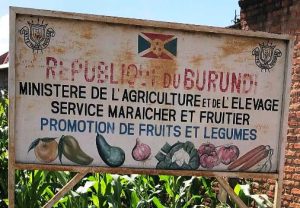
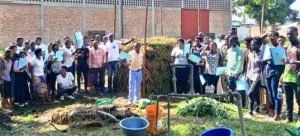
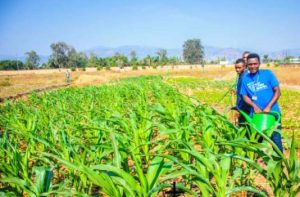
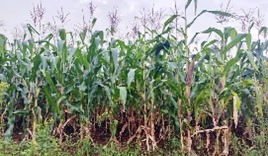
The second big development began with targeting, connecting and involving the 2026 Agriculture and Zootechny Program Graduates with the Haley-McCready Outreach and Development Fund projects and the Free Methodist Church of Burundi’s six Annual Conferences and their local Parishes. The 2026 AZP Graduates are special because they are the first class and, perhaps, the last class, to receive four months of Foundations for Farming’s impressive conservation agriculture practical training and supervised practice in using the high-production methods.
Foundations for Farming (FfF) is a conservation agriculture training approach that equips community farmers to improve crop productivity, soil health and household resilience through practical, low-input farming, high-production methods. It emphasizes principles such as minimum soil disturbance (no ploughing), permanent soil cover, composting, mulching, crop rotation, precision planting, weed control, water conservation, pest management, soil biological health, precise and timely field management and good stewardship of natural resources (see link to video at the end of this Bulletin).
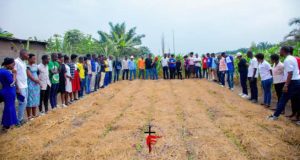
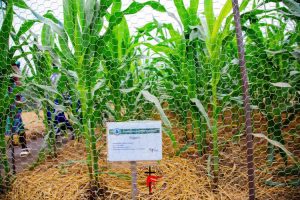
In addition to agronomic practices, the program often integrates values such as diligence, planning, integrity and responsible resource management with many implementations delivered by faith-based organizations. The overall aim is to enable sustainable increases in farm productivity, food security and livelihoods, while reducing environmental degradation.
Beyond technique, Foundations for Farming emphasizes four management “cornerstone” principles that translate to both farming and life:
- On Time: Planting, weeding, and harvesting must be done at the right moment to ensure success
- At Standard: Emphasizing excellence and high-quality work, viewing farming as a form of faithful stewardship
- Without Wastage: Carefully managing resources like water, sunlight, seed and time
- With Joy: Fostering a positive, thankful attitude to overcome fear and hopelessness
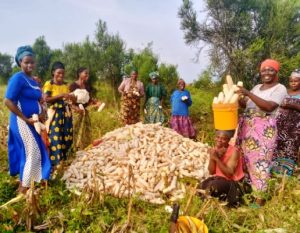
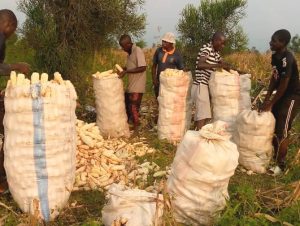
Foundations for Farming (FfF) and others report that when the conservation agriculture methods are used correctly over time, agriculture production can be 6 to 10 times more productive than the too commonly used traditional crop cultivation methods in Burundi.

Collaborating with Hope Africa University
Using his professional and personal relationships, Dr. McCready was able to recruit Foundations for Farming (formerly part of Farming God’s Way) to collaborate and become involved with Hope Africa University’s (the University) Agriculture and Zootechny Program (AZP) In 2025, Foundations for Farming (FfF) agreed to provide four months of intensive practical training and supervised practice free of charge.

The obvious result of providing Foundations for Farming’s practical training and supervised practice is that all 56 of the February 2026 AZP Graduates know how to use the FfF conservation agriculture, high-production methods and, thereby, increase agriculture production.

Accordingly, the 2026 AZP Graduates are special because they are the very first class to have received any significant practical crop cultivation training; there were 56 AZP 2026 Graduates who received the FfF training. Of the 56 AZP Students, 36 were selected by the Church and all the Church-selected Students received a full two-year scholarship from Friends of Hope Africa University (Friends). Dr. John McCready considers involving Foundations for Farming in the Agriculture and Zootechny Program to be his biggest and most important contribution he has made to Hope Africa University.
Although Foundations for Farming wants to continue to provide their impressive practical training and supervised practice on conservation agriculture, high-production methods for the University’s AZP students, the University has not agreed and committed to fully involve FfF again to any significant extent.
Now, the main challenges are (1) to attempt to have FfF return to provide their intensive practical training and supervised practice and (2) to try to contact, connect and involve as many as possible of the special 2026 AZP Graduates with the Church’s agriculture and livestock development personnel, projects and activities and the H-MODF Project Managers, Project Beneficiaries and agriculture and livestock development projects.
Collaborating with the Free Methodist Church of Burundi
Not too long ago, Bishop Déogratias NSHIMIYIMANA told representatives of the University, Friends and the H-MODF that the Agriculture Program must be practical and it must meet is original purpose which is to serve the Church and, thereby, to benefit its members and other community farmers.
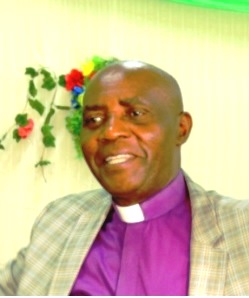
The Church’s support for the H-MODF has never been stronger. For past two or three years, Executive Secretary, Evariste BIMENYIMANA has repeatedly been telling Dr. John McCready that the Church wants him to work with the University Rector in trying to improve the Agriculture Program by having it become more and more practical..
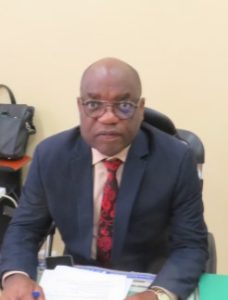
At the request and on behalf of Murungwa IRAKOZE of Foundations for Farming, Dr. McCready asked Executive Secretary Evariste BIMENYIMANA if he would visit FfF’s Eden Training Centre, their impressive Demonstration Fields and Beneficiaries. Rev. Evariste quickly responded by saying, “Yes, get me some dates.” On February 4th, Executive Secretary Evariste lead the visit to Foundations for Farming,
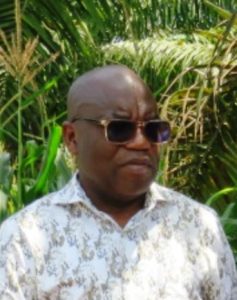
Rev. Evariste was accompanied by a group of representatives from the University and the Church, including Rev. Raoul DUKORE who is the Superintendent of Ntahangwa Annual Conference; the largest Annual Conference.
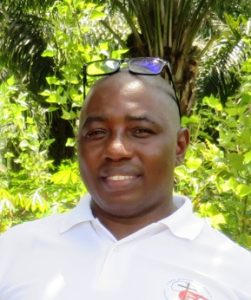
The beneficiaries warmly welcomed the visitors by singing and dancing.
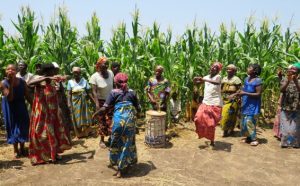
Two of the beneficiaries provided their personal testimonies on how their lives have been transformed by Foundations for Farming and their high-production agriculture methods. Executive Secretary Evariste seemed to feel very comfortable in speaking to the everyone, including the beneficiaries.
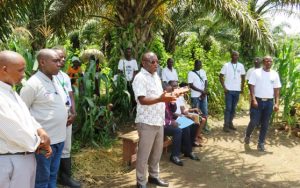
It was an impressive and wonderful visit. The visit came to a close with everyone holding hands and singing.
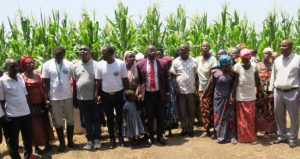
The H-MODF has worked in association with the Church and there has been some collaboration. Both the H-MODF and Church have agriculture and livestock development projects and activities taking place throughout Burundi. However, this year the H-MODF and the Church will be collaborating much more on contacting, connecting and involving the 2026 AZP Graduates with the Church’s agriculture and livestock personnel, projects and activities and the H-MODF’s Project Managers, Project Beneficiaries and agriculture and livestock development projects.
The H-MODF has 17 Project Managers who are Graduates of AZP Graduates before Foundations for Farming was involved and, therefore, they did not have any significant practical crop cultivation training. With these AZP Graduates as Project Managers, the agriculture production is not significantly better than the low productivity of the traditional agriculture methods. Accordingly, it seems obvious that priority ought to be given to making the best use of the 2026 AZP Graduates who know the Foundations for Farming conservation agriculture, high-production methods and the H-MODF intends to do so.
The first thing the H-MODF did was to develop a full listing of the AZP Students organized by the Church’s 6 Annual Conferences and noting their home Commune, home Colline and home Parish and their contact information.
LIST OF 2026 AGRICULTURE AND ZOOTECHNY PROGRAM GRADUATES; ALL ANNUAL CONFERENCES
|
Name |
Conference | Commune | Colline | Telephone | Parish |
Bursary |
With the full support of our Board of Directors, the H-MODF decided to forgo the open Call for Proposals 2026 and instead to strategically target and assist 8 of the best 2026 AZP Graduates (one from each of five Annual Conferences and three from the largest Annual Conference) to develop project proposals and receive one of H-MODF’s one-time, start-up development grants. In selecting the 8 Graduates, we consulted with Cyprien NTUNZWENIMANA, Head of the Agriculture and Zootechny Program.
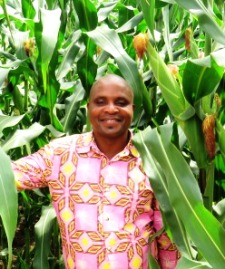
We called the 8 2026 AZP Graduates and asked, (1) if they were living in their home Annual Conference and their home community; (2) if they planned to stay in their home community; and, (3) if they wanted to work with the H-MODF. All 8 Graduates said yes to all of our questions and, thereby, qualified to be assisted in developing a project proposal.
- Cankuzo: Gabriel Niyonsaba
- Cibitoke: Aimé-Sauveur Nishemezwe
- Gitega: Lydie Nsengiyumva
- Makamba: Frédéric Nduwimana
- Ngozi: Védaste Tuyishime
- Ntahangwa: Jean Bosco Niyokwizera
- Ntahangwa: Marie-Chérissa Kezakima
- Ntahangwa: Rosette Ndayikengurukiye
We invited the selected Graduates to attend our May Project Managers and Agriculture Program Meeting. We seated the attendees with others from the same Annual Conference.
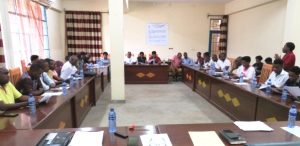
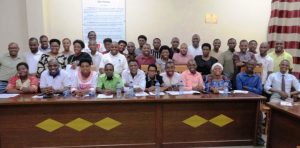
We introduced everyone to everyone and announced our plans to assist the 8 selected AZP Graduates to develop a project. As the selected 2026 Graduates were in Bujumbura, we had a meeting after the meeting to discuss more about developing the projects and project proposals.
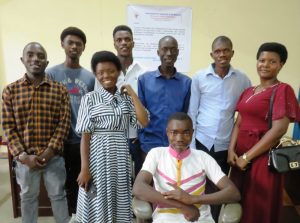
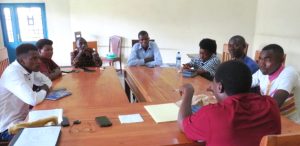
We have been assisting the targeted 8 2026 Graduates and we expect to soon have one new 2026 AZP Graduate-lead H-MODF project in five of the Annual Conferences and three in the largest Annual Conference; Ntahangwa. In addition, we have decided to contact and try to connect and involve the remaining 2026 Graduates with the H-MODF and the Church agriculture personnel, projects and activities.
In May and with our plans in mind, Dr. McCready decided it would be a good idea to meet with the Executive Secretary of the Church; Rev. Evariste BIMENYIMANA, who is also the Chairman of the Administrative Council.
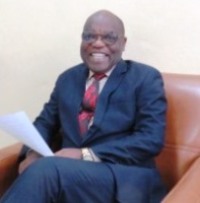
The purpose of the meeting was to inform Rev. Evariste of our plans but, more importantly, it was to obtain his support. After Dr. McCready described the plans and in a somewhat formal fashion, he said, “So, I am here hoping to have the support and blessings of the Executive Secretary for our plans.” In a somewhat formal fashion, Rev. Evariste quickly responded by saying, “You have the support and blessings of the Executive Secretary for what you are doing.” Then he surprised Dr. McCready by going further than he would have ever suspected at that time. Rev. Evariste asked when he was returning to Canada. He said he was leaving on the 11th of June. Then Evariste asked Dr. McCready if he would be willing to attend a meeting with Annual Conference Superintendents before he left. Dr. McCready was thrilled and said, ‘Yes, it would be my honor to attend.”
It so happened that at the same time the H-MODF wants to be proactive with trying connect and involve the AZP Graduates, the Church is doing the same thing. However, it was not possible to have the meeting with Bishop Déogratias NSHIMIYIMANA, Executive Secretary Evariste BIMENYIMANA and the Superintendents before Dr. McCready left but it happened shortly after he left. For the meeting, the H-MODF was able to develop folders that included the list of all of the 2026 AZP Graduates by Annual Conferences and another list that included the 2026 AZP Graduates and the H-MODF projects and Project Managers’ contact information for each of the six Annual Conferences. The folders had other material that was designed to inform and encourage the Superintendents and Parish Pastors to contact, connect and involve all of the AZP Graduates and H-MODF Project Managers in their Annual Conference.
During the meeting with the Superintendents, it was stated that the H-MODF is not part of the Church but is a partner with Church. Bishop Déogratias NSHIMIYIMANA explained that part of the Church’s Holistic Transformation Ministries requires the Church to develop the communities. He said that “Agriculture development is the cornerstone of community development.” The meeting and agreement for the H-MODF and Church to collaborate will no doubt be moving agriculture development forward more than ever before.
Conclusion
We will keep you informed on these important collaborative developments in agriculture development. We will keep trying to convince the University of the importance of bringing Foundations for Farming back in a significant way. It seems obvious that the graduates of the University AZP must be trained in conservation agriculture, high-production methods so that they can be effective in training community farmers to be able to increase agriculture production.
Since the University’s 2026 AZP Graduates were provided with significant practical training and supervised practice using the high-production Foundations for Farming methods, it only makes good common sense that the Church and the H-MODF collaborate to get them connected and involved with the community-based agriculture personnel, projects and activities.
All 8 project proposals developed by the selected 2026 AZP Graduates have been completed. Very soon, you will be advised that the projects have been approved and the first installments of money has been distributed. This initiative will mean that all six Annual Conferences will have a new H-MODF agriculture and livestock development project with a Project Manager who has been trained in high-production methods and, therefore, the projects will be able to have high-production harvests.
So, stay tuned for more on the important collaborative developments in agriculture development in Burundi.
To help us continue to do more and to do better, please consider donating/investing in agriculture development in Burundi; visit: Donations – Haley-McCready Outreach and Development Fund.
|
Comparison: Conventional vs. Foundations for Farming |
||
|
Aspect |
Conventional Farming |
Foundations for Farming |
| Soil management | Ploughing, burning residues | Minimal disturbance, mulching |
| Inputs | High fertilizer & chemical use | Compost, organic fertilizers |
| Yields | Low, vulnerable to drought | Up to 6x higher yields |
| Sustainability | Soil erosion, fertility loss | Soil fertility improves yearly |
| Mindset | Survival-focused | Stewardship, joy, dignity |
In the context of Burundi, Foundations for Farming is used as a tool for community development and social restoration, aiming to help families become self-sufficient and active contributors to their communities.
Basic Principles of Foundations for Farming
This video provides a practical, visual overview of the core values, principles and methods taught by the program to help farmers improve their land and yields.