
Burundi is one of the poorest countries in the world and Burundian community farmers use traditional agriculture methods that are not as productive as other methods. Burundi experiences devastating poverty, serious food insecurity and extreme malnutrition. Nevertheless, the Haley-McCready Outreach and Development Fund agriculture development projects are doing well and, as a result of our Call for Proposals 2025, more projects are expected in the very near future.
The primary purpose of the Haley-McCready Outreach and Development Fund is to alleviate poverty. Accordingly, we have developed and evolved a successful agriculture development project model that includes a self-help association of poor women, crop cultivation, animal husbandry and microfinancing. Our project model works and we are alleviating poverty and improving lives. In spite of our success, we have not yet been able to provide practical, high production crop cultivation training for our Project Managers or our Project Beneficiaries.
Facing and Addressing Burundian Realities
The purpose here is to announce an important development related to Hope Africa University’s Agriculture Program; the inclusion, the integration of collaborative, practical, high production crop cultivation training in the Hope Africa University (HAU) Agriculture Internship Program.
For the first time, Hope Africa University’s current second-year Agriculture Program students will graduate having had practical, high production crop cultivation training.
Right from the beginning (2010), yours truly, Dr. John McCready and the Haley-McCready Outreach and Development Fund have worked in association with the Free Methodist Church of Burundi (FMCoB), Hope Africa University (HAU) and Friends of Hope Africa University (FHAU). Dr. McCready holds a Memorandum of Understanding with HAU and is recognized as its Senior Advisor on Development. In 2022, when HAU started an Agriculture Program, the Haley-McCready Outreach and Development Fund became a Partner Organization to the new Agriculture Program.
With increased support and collaboration from the Church, the University and Friends, Dr. John McCready and the Haley-McCready Outreach and Development Fund have been able to play a critical role in organizing and integrating collaborative, practical, high production crop cultivation training into the HAU Agriculture Program’s Internship.
Strengthening Partnerships
The integration of practical crop cultivation training only became possible because of support and collaboration from the Church and the leadership of Executive Secretary Evariste BIMENYIMANA.

The integration of practical crop cultivation training has only become possible because of support and collaboration from the University and the strategic leadership and involvement of Rector Servilien NITUNGA.

Developing New Partnerships
The practical crop cultivation training requires land and I was able to arrange for the training to take place at the nearby Ministry of Agriculture and Livestock Market Gardening and Fruit Service that is located next to the Van Norman Clinic.

The use of the land only became possible because of the cooperation and support of the Market Gardening and Fruit Service Centre and the leadership and collaboration of Chief Eugene MANIRAMBONA.

To be able to provide practical crop cultivation, we needed knowledgeable and experienced practical crop cultivation experts; a highly-skilled training team, and I was able involve Foundation for Farming. The practical crop cultivation training will be provided by Foundations for Farming which shares our mission of extending practical agriculture training, practical demonstration and practical support to community farmers throughout Burundi.
The practical crop cultivation training only became possible with the cooperation and support of Foundations for Farming and the leadership and collaboration of Donna Bloomfield.

The practical crop cultivation training only became possible with the cooperation and support of Foundations for Farming and the leadership and collaboration of Murungwa IRAKOZE.

Foundations for Farming
Foundations for Farming, formerly known as Farming God’s Way, … aims to bring transformation to individuals, communities and nations through faithful and productive use of the land, leading to long-term sustainable development. Yields are significantly higher (at least 6x) than conventional farming methods, when principles are applied faithfully and the same land is used year after year.
Foundations for Farming in Burundi – Hope for Tomorrow Global
Foundations for Farming implements the principles of conservation agriculture, so there’s no ploughing and only minimal soil disturbance. There’s no burning and the soil is covered with mulch and crops are rotated each season. This emphasis on stewardship of the land leads to increased yields while also protecting the environment.
Foundations for Farming methods increase production by faithfully applying 4 key management principles:
- On time – Planning ahead, preparing well, starting early, don’t be late!
- High standards – Do everything as well as you can without taking short cuts, be honest and honourable
- Without wastage – Don’t waste time, soil, water, nutrients, energy or opportunities
- With joy – Doing these things faithfully and with thankfulness will help eradicate fear and despair and will bring hope and joy, which brings strength!
Practical Crop Cultivation Training
The practical training will focus on cultivating corn and soybeans and include instruction, skill development and supervised direct practice on composting, mulching, planting, crop rotation and much more. The HAU Internship practical training is organized and scheduled as follows.
- Visit to Foundation for Farming’s Eden Training Centre and Muzinda Demonstration Fields (June 20th)
- Foundations for Farming prepares the land and begins planting for demonstration purposes (June 26th)
- Five-day practical training program that includes the 12 lessons on the Foundations for Farming (July 28th to August 1st)
- Students make weekly visits to practice implementing the 12 lessons and care for the plants (August through to harvest)
- Foundation for Farming’s trainers make about 12 follow-up monitoring and training visits for students; the follow-up visits with students will take place Tuesday mornings every two weeks or as needed and required (August through to harvest)
On Friday, June 20th, the first part of the practical training took place and that was the visit to the Foundations for Farming’s Rubirizi Eden Training Centre and their Muzinda Demonstration Fields.
Visit to Eden Training Centre
At the Eden Centre, the students were provided with and introduction and overview of the Foundations for Farming.


Visit to Muzinda Demonstration Fields
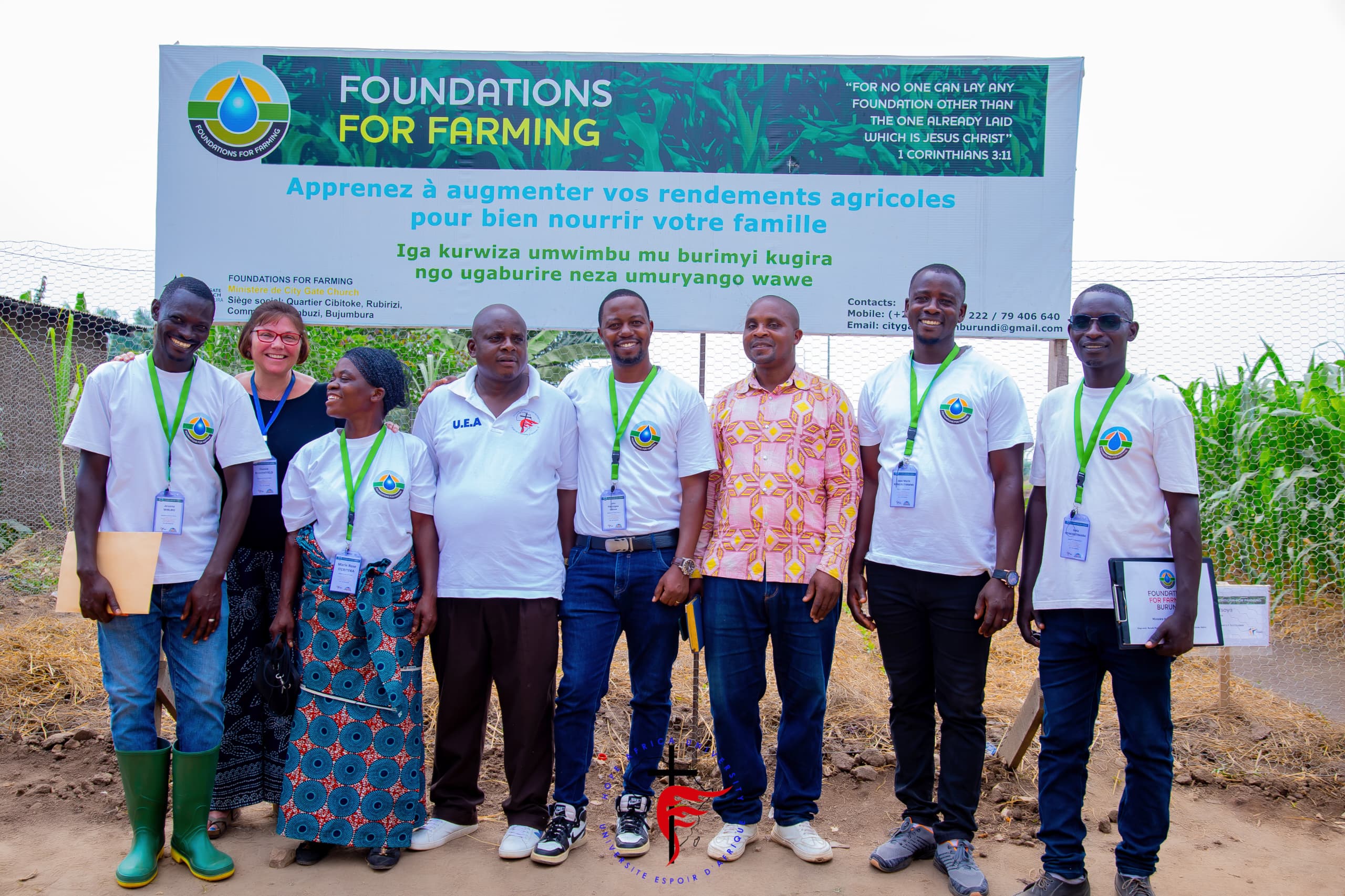


 Listening to a Beneficiary’s Experience
